The Planning Application
With the house design agreed we prepared the detailed planning application. Border Oak offer a comprehensive design and planning service and work alongside our specialist partners to compile all the assessment and surveys needed.
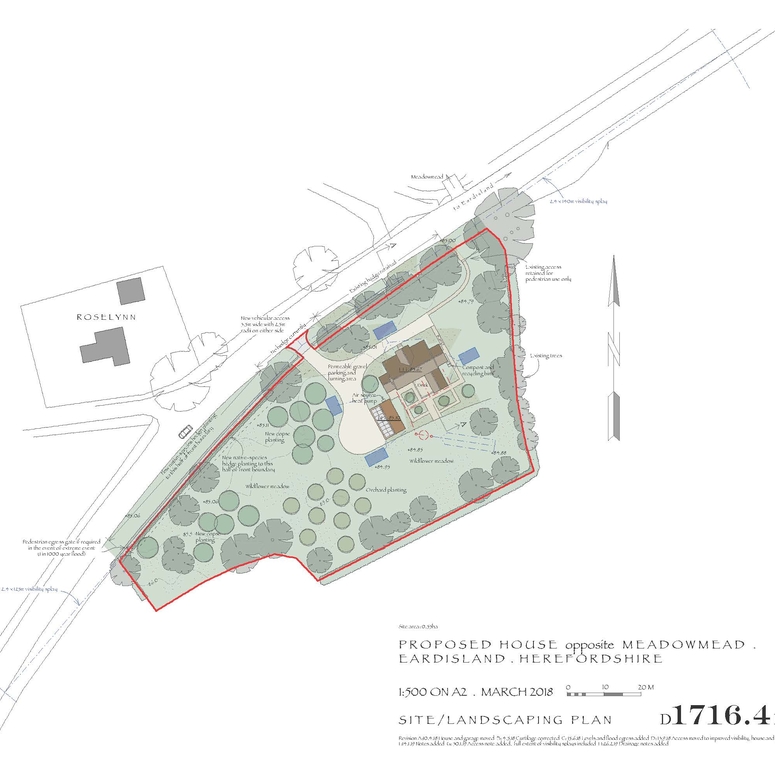
Sadly the planning process in Herefordshire neither simple nor speedy. This site was admittedly slightly more complex than some because it isn’t within the 1980’s identified ‘settlement boundary’ (where new homes tend to be more likely to be approved be default) yet the settlement boundary is largely covered by flood risk, which makes building here difficult. Our plot was as a close to the built form of the village, yet without risk of flooding, as possible.
We studied the village Neighbourhood Development Plan (a document written by the parish setting out its own planning policy and expectations). We were confident that we could meet all of the policies, aspirations and criteria and hopefully make a positive contribution to the long history of local village architecture.
We commissioned ecology reports, landscape impact assessments, flood risk assessments, arboricultural reports, traffic surveys and drainage plans and added these to the house drawings (elevations, floor plans, artists impressions), site plans, landscaping plans and design and access planning statement. We submitted the application online and paid the fee.
And then we waited.
Most planning applications are supposed to be determined within 8 weeks. This deadline came and went.
There were no objections from the public, parish council or any statutory consultees – and yet the officer would not determine the application. We knew it was policy compliant with the Neighbourhood Development Plan, the National Planning Policy Framework and the local Core Strategy so we were unsure why the application wasn’t being decided. We also knew Herefordshire had missed its housing delivery targets for several years and couldn’t demonstrate that it had enough housing land, which meant planning approval should be granted ‘without delay’ – unless the impact of doing so would significantly or demonstrably outweigh the benefit (which was not the case).
The planning officer finally responded to say that he was going to refuse the application. His specific concerns were:
- The distance between the site and the village settlement boundary.
- The lack of a formal pavement from the site to the existing pavement (approx. 30 m) which he felt made it ‘unsustainable’.
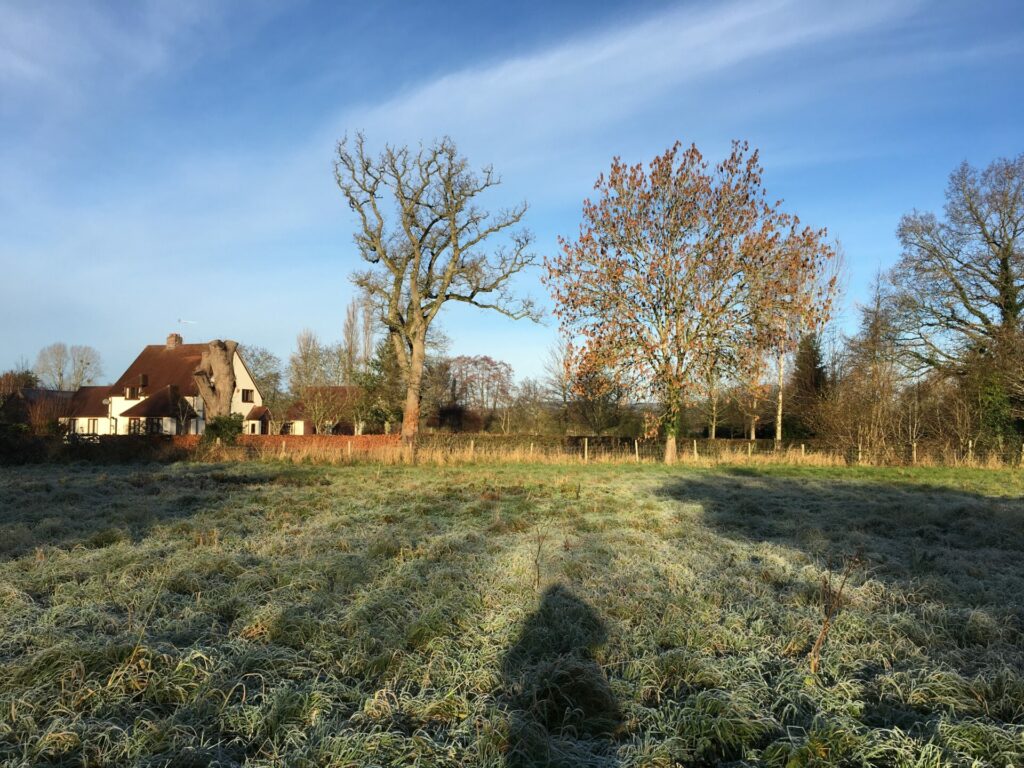
- The potential loss of a ‘heritage orchard’.
- The potential number of cars passing the site and the possible speed of these cars.
- His view that the small scale of the project (one house) offered no benefit to the wider area in terms of economics.
Whilst we were shocked by the potential refusal after such a long wait, we were also puzzled by his concerns which seemed to a personal rather than policy.
We quickly set about a counter argument to each point and provide supporting information to address his concerns specifically. We commissioned a further traffic survey that showed vehicle movements were low and slow (its an unclassified village road) and that visibility was excellent.
We argued that as it was an unclassified road with so few cars (evidenced by surveys) with wide grass verges (already used by other residents) it was possible and practical for occupants to access village facilities by foot and bike – in other words, sustainably.
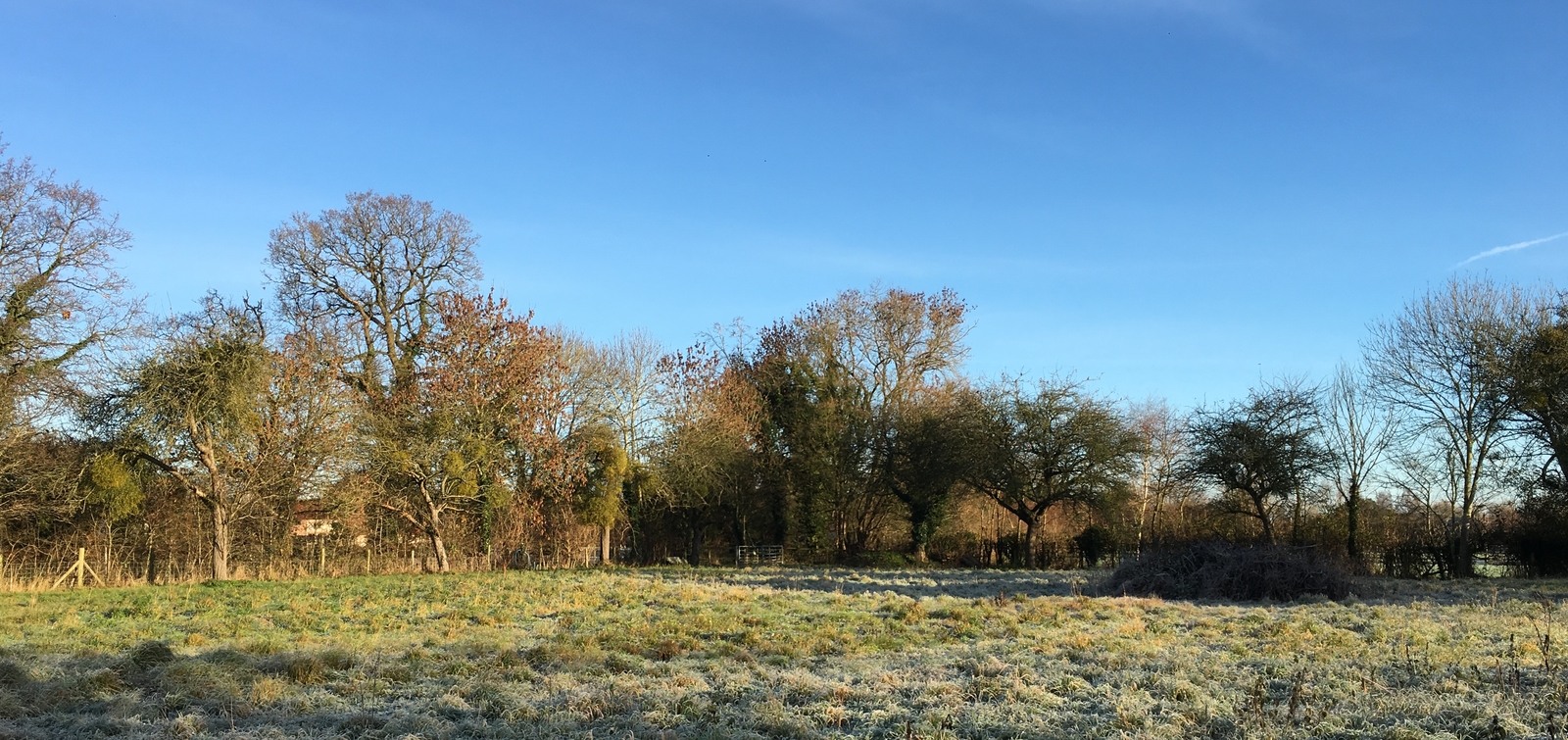
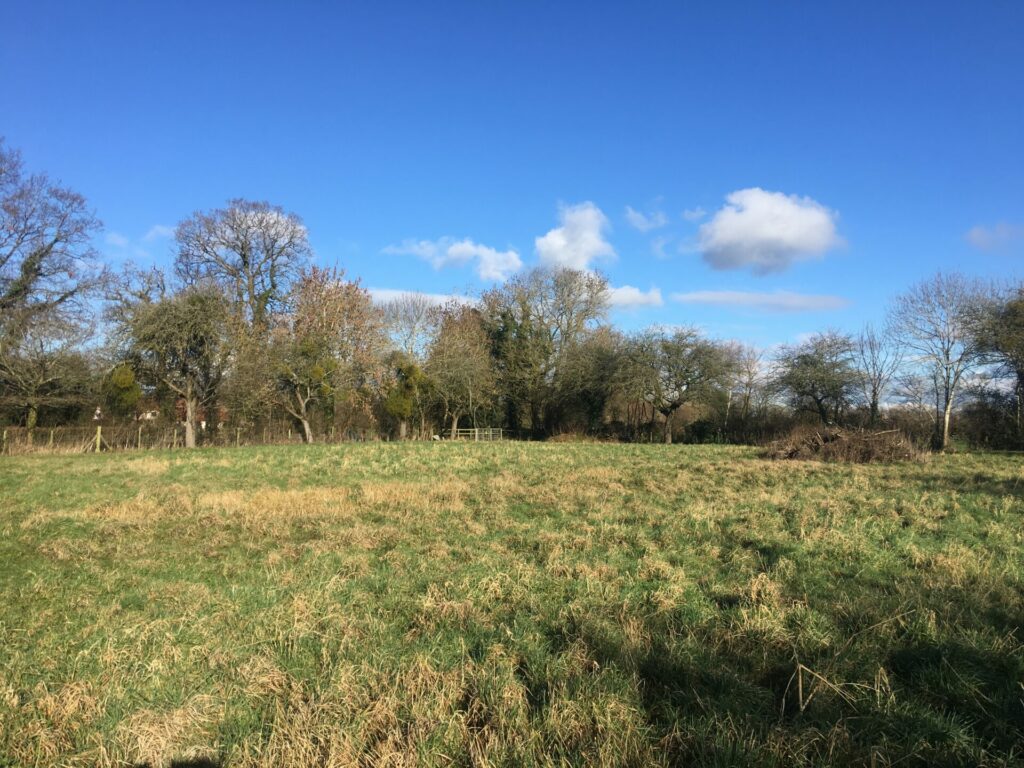
We were proposing to save and add to the heritage orchard – under our proposal and not a single tree would be lost – with new heritage fruit trees actually being planted. Trees were an integral element of our landscape design and were further enhanced by a wild flower meadow, new native hedges, biodiversity areas ongoing maintenance – none of this would happen without the new home and its occupants.
The village neighbourhood development plan specifically required that any new development must be located in the area closest to the ‘settlement boundary’ but without any flood risk. This plot was exactly what the NDP set out to allow, so we reiterated the NDP policy expressly to the officer – who declared that he felt the NDP was wrong. And with regard to the officers preference for more homes on the site to maximise the land and make more economic contribution, we gently pointed out that the economic benefit of one house made locally was still significant. We felt it would be inappropriate to build an estate of houses on a plot that they were concerned might also be ecologically sensitive or dangerous to access.
As we chipped away at the officers points of contention, the Highways Dept. removed their letter of concern which meant the planning officer had no grounds upon which to base a refusal. We understood that the approval – despite being policy compliant – was reluctant, and only issued because we had be fortunate enough to intervene before the refusal was sent in the post.
Detailed Planning Approval was eventually granted – but with more than 20 conditions and a year later than it should have been.