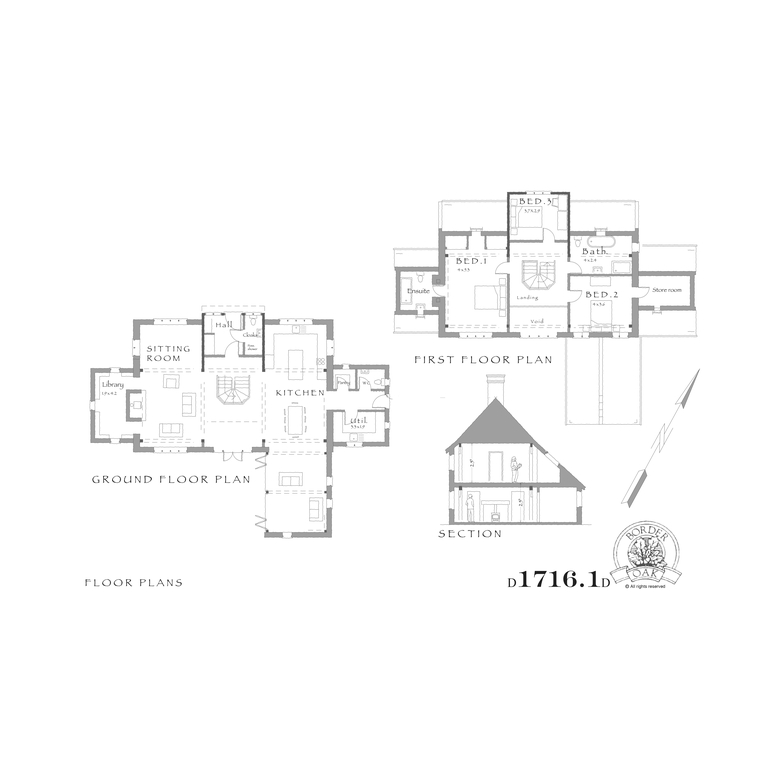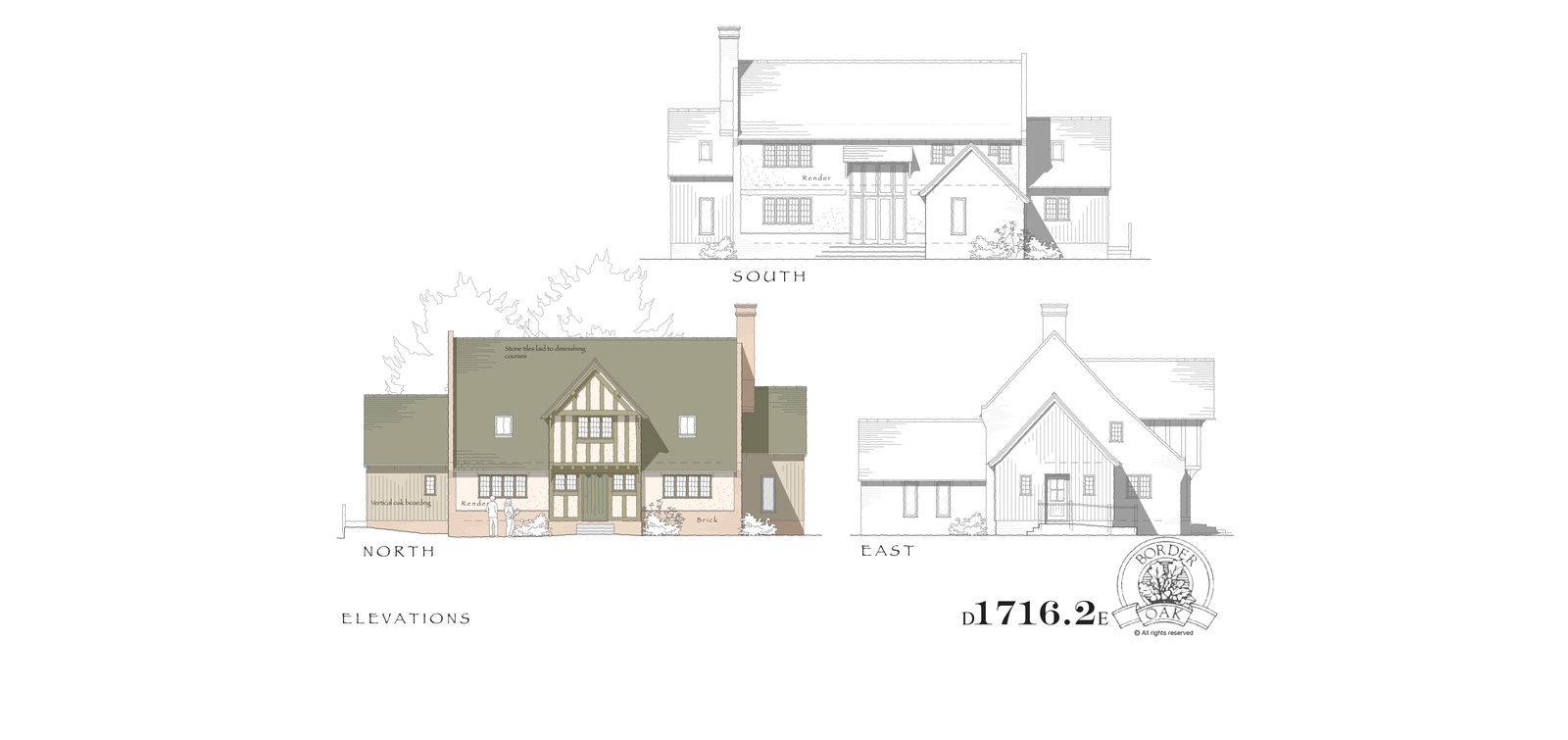
The Design – Arts & Crafts Inspired
John and Patsy always knew that they would like to create a home founded on the true principles of the Arts and Crafts movement. They had considered other design options, including a super modern barn, but in the end both felt drawn to something classical and enduring, and John’s life long passion for Arts & Crafts architecture was unwavering.
John is an architect and has been responsible (alongside Darren Ray and before Darren, his uncle Lawrence Ray) for the renowned Border Oak portfolio of designs across five decades.
However, even with every option and avenue available and despite having the very best vernacular architecture minds on board, it was actually very hard to settle upon the final design narrative. John has always been very conscious that fashions are tempting but temporary, and preferred when houses transcended trends; especially oak framed houses which will last centuries and so he felt have a responsibility to be good! In the end, John followed his instincts and chose to celebrate classic vernacular designs and craftsmanship, adding in a bit of fun and irreverence and capturing ‘every day delights’ where he could.
John and Patsy felt very strongly that they wanted echo the fundamental principles of the Arts & Crafts Movement as authentically as possible but to create a 21st Century home. They didn’t want to build a pastiche or a slavish copy of a specific Arts and Crafts building, but did want to use the project to support the many talented artisans that work in the local area.
The Arts and Crafts Movement – perhaps most famously associated with William Morris and John Ruskin – was a philosophical concept of the 19th Century, that looked to celebrate craftsmanship and restore a human influence upon all things that were made and designed. It was envisaged as an antidote to the rising industrial revolution that enabled mass production, often by machine, but led to a monotonous deskilling of the general factory based workforce and the loss of traditional skills.
The movement was hugely influential in the UK, Europe and America, and covered a wide range of craft disciplines from fabric, furniture, ceramics, jewellery, literature and metal work. Preeminent designers continuously sought a balance between function and aesthetics – seeking for made items to be both ‘beautiful and useful’.
In architecture, the Arts and Crafts movement was noted for an unwavering search for ‘simplicity’ and detail, alongside the revival of lost skills and application of traditional workmanship. Famous Arts and Crafts architects such as Voysey and Webb strove for clarity, beauty and form – emphasising the importance of natural materials and vernacular detailing, alongside proportion and function. Fuss was eliminated, which often provided the perfect backdrop for the more decorative Arts and Crafts interior items.
Many of the most successful original Arts and Crafts buildings can be identified by their shared characteristics of:
- Clarity of design and form
- Variety of local, natural materials that would weather and age into their surroundings
- Asymmetrical, organic elevations and plans – yet innately balanced facades
- Traditional construction methods
- Craftsmanship
John has been an admirer of Arts and Crafts architecture since university, and was heavily influenced by the principles of the movement when he set up Border Oak and revived the lost art of oak framing. The Arts and Crafts inspiration can be felt throughout the Border Oak portfolio – even our contemporary designs are underpinned by craftsmanship, proportion, scale, vernacular materials, detail, simplicity and form.
Redgate House was the ideal opportunity for John to collect all of his influences and interests – to produce an authentic interpretation of the principles that had guided him; creating a home that could become a legacy celebration of the incredible makers and craftspeople Border Oak have spent decades forging relationships with. It was also a chance to create something autobiographical and fun.